

Class 1
Explosives
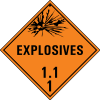
Explosives with a mass explosion hazard; example TNT, dynamite, nitroglycerine.
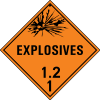
Explosives with a severe projection hazard.
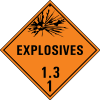
Explosives with a fire, blast or projection hazard but not a mass explosion hazard.
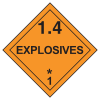
Minor fire of projection hazard; includes ammunition and most consumer fireworks.
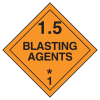
Blasting agents.
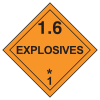
Extremely insensitive articles.
Class 2
Gases
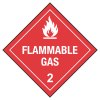
Flammable gas - gases which ignite on contact with an ignition source, for example, acetylene, hydrogen.
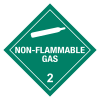
Non-flammable gases - gases that are neither flammable nor poisonous; examples include oxygen, nitrogen, neon.
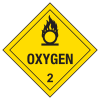
Non-flammable gases - gases that are neither flammable nor poisonous; examples include oxygen, nitrogen, neon.
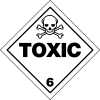
Poisonous gases – gases that can cause death or serious injury to human health if inhaled, for example, fluorine, chlorine, hydrogen cyanide.
Class 3
Flammable Liquids
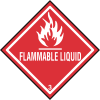
Highly flammable liquids with a boiling point below 35 degrees Celsius; example diethyl ether, carbon disulfide.
Flammable liquids with a flashpoint of less than 23 degrees Celsius and a boiling point above 35 degrees Celsius, for example, petrol, acetone.
Liquids with a flashpoint above 23 degrees Celsius but not exceeding 61 degrees Celsius and a boiling point greater than 35 degrees Celsius; example kerosene.
Class 4
Flammable solids
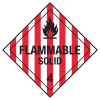
Flammable solids which are easily ignited and readily combustible; example nitrocellulose, magnesium, safety or strike-anywhere matches.
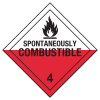
Spontaneously combustible substances; example aluminum alkyls, white phosphorus.
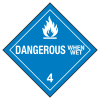
Substances that emit a flammable gas when wet or react violently with water; examples include sodium, calcium, potassium.
Class 5
Oxidizing agents
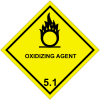
Oxidizing agents other than organic peroxides; example calcium hypochlorite, ammonium nitrate, hydrogen peroxide.
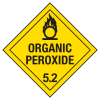
Organic peroxides, either in liquid or solid form; example benzoyl peroxides, cumene hydroperoxide.
Class 6
Infectious Substances
Poisonous substances that are likely to cause death or serious injury to human health if inhaled, swallowed, or absorbed through the skin; for example, potassium cyanide, mercuric chloride, hydrofluoric acid.
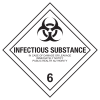
Examples of biohazardous substances include virus cultures, pathology specimens, and used intravenous needles.
Class 7
Radioactive Substances
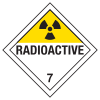
Radioactive substances consist of substances or a combination of substances that emit ionizing radiation; for example, uranium, plutonium.
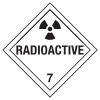
Radioactive substances consist of substances or a combination of substances that emit ionizing radiation; for example, uranium, plutonium.
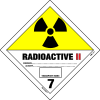
Radioactive substances consist of substances or a combination of substances that emit ionizing radiation; for example, uranium, plutonium.
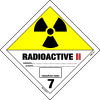
Radioactive substances consist of substances or a combination of substances that emit ionizing radiation; for example, uranium, plutonium.
Class 8
Corrosive Substances
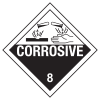
Examples of acids include sulfuric acid, hydrochloric acid.
Alkalis example potassium hydroxide, sodium hydroxide.
Class 9
Miscellaneous

Hazardous substances that do not fall into the other categories; example asbestos, air-bag inflators, self-inflating life rafts, dry ice.